

Fixed package
Language, Communication and Family Support for Children
One purchase, a connected learning pathway.
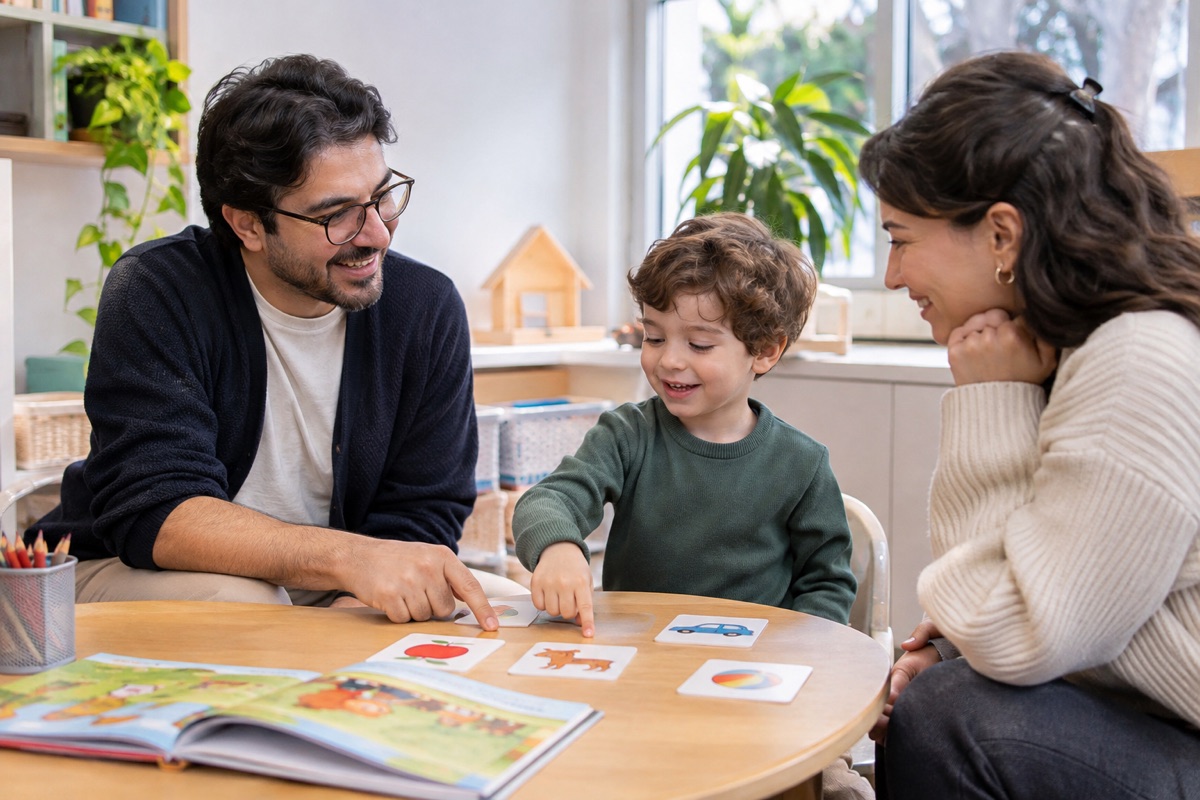
Language, Communication and Family Support for Children brings together three complementary courses, each with eight modules. The curriculum combines subject knowledge, responsible role boundaries and practical work.
Who can attend?
Open to everyone for personal development, learning and professional awareness. Parents seeking to understand children's communication development; people considering support roles in preschools, study centres and special-education organisations; and people working in parent communication, early-childhood activities and social projects.
Curriculum
Speech and Language Difficulties Awareness
1. Communication and language development
Explain receptive language, expressive language, articulation, fluency and communication development.
2. Developmental signs by age
Cover expected communication skills in early childhood and the need to assess developmental differences.
3. Awareness of speech sounds and fluency
Describe examples of articulation difficulties, stammering and rapid speech without making diagnoses.
4. Hearing and environmental factors
Cover hearing assessment, screen use, interaction quality and conditions that influence language development.
5. Supportive conversations with families
Work on explaining observations to families, avoiding stigmatising language and providing information safely.
6. Communication environments at home and school
Plan educational activities involving reading, turn-taking and encouraging conversation.
7. Distinguishing professional responsibilities
Clarify the diagnostic and rehabilitation responsibilities of speech and language therapists and the role of support staff.
8. Referral and follow-up communication
Prepare a referral note for authorised specialists and a family communication plan.
Child Therapy Awareness
1. Stages of child development
Examine cognitive, social and emotional characteristics of preschool, school-age and adolescent development.
2. Safe communication with children
Cover age-appropriate language, active listening and respect for children's views.
3. Play and expressing emotions
Explain learning through play, naming emotions and creating space for expression.
4. Understanding behaviour in context
Evaluate the function of behaviour, environmental conditions and the influence of adult attitudes.
5. Parent-teacher cooperation
Develop information sharing, positive feedback and shared support routines.
6. Children's rights and safeguarding
Introduce privacy, child safety, bullying and warning signs of neglect and abuse.
7. Recognising clinical warning signs
Cover referral to appropriate specialists, without conducting assessments, when persistent impairment or developmental concerns arise.
8. Observation and referral portfolio
Prepare non-diagnostic observation notes, a parent-conversation framework and a referral plan.
Family Counselling
1. Family systems and the life cycle
Examine family roles, life stages, boundaries and the everyday effects of changes within the family.
2. Safe communication and active listening
Practise non-judgemental listening, open-ended questions, I-statements and feedback that reduces misunderstandings.
3. Conflict resolution and negotiation
Analyse solution-focused conversations about household responsibilities, conflicting expectations and disagreements.
4. Parenting and intergenerational communication
Evaluate developmentally appropriate communication, family meetings and consistent boundaries.
5. Awareness of family stress and crises
Recognise sources of support and signs that professional help may be needed during moves, unemployment, bereavement and separation.
6. Ethical principles and privacy
Cover fundamental principles of consent, confidentiality, personal data, professional boundaries and child protection.
7. Referral in high-risk situations
Work through support and referral to authorised institutions in cases of violence, abuse, severe psychological distress and urgent safety risks.
8. Case analysis and a support plan
Use a fictional example to prepare a needs map, identify family resources, write conversation notes and plan appropriate referrals.
Integrated practical portfolio
Create a developmental-communication information leaflet, a sample parent-conversation form and a specialist-referral and follow-up flowchart.
Professional boundaries and certificate scope
Assessment and rehabilitation of speech and language disorders require the relevant professional degree and legal conditions; this programme does not confer the title of speech and language therapist. It does not confer the titles of child therapist, psychologist or clinical psychologist, or authority to provide therapy to children. Family-counsellor practice requires the relevant degree, legally compliant education and other legal conditions; this package alone does not confer that authority.
Frequently asked questions
Which courses are included?
Speech and Language Difficulties Awareness · Child Therapy Awareness · Family Counselling
Who can attend?
Open to everyone for personal development, learning and professional awareness. Parents seeking to understand children's communication development; people considering support roles in preschools, study centres and special-education organisations; and people working in parent communication, early-childhood activities and social projects.
Does this package confer professional practice authority?
Assessment and rehabilitation of speech and language disorders require the relevant professional degree and legal conditions; this programme does not confer the title of speech and language therapist. It does not confer the titles of child therapist, psychologist or clinical psychologist, or authority to provide therapy to children. Family-counsellor practice requires the relevant degree, legally compliant education and other legal conditions; this package alone does not confer that authority.